
India's food regulator, FSSAI, has prohibited Dabur India from selling products like honey, cow ghee, and edible oils with '100 per cent' claims, deeming such labelling misleading and against regulations.

The US military has lost at least 45 MQ-9 Reaper drones during the conflict with Iran, representing a quarter of its fleet and a significant financial blow. These losses, some due to communication failures, raise questions as India recently signed an agreement to procure 31 of these drones.

Adani Properties has emerged as the largest value creator in the 2026 Grohe-Hurun India Real Estate 150, adding Rs 38,000 crore in valuation to become India's fourth-most valuable real estate company, with its valuation rising 72.5 per cent year-on-year to Rs 90,400 crore.

Prime Minister Narendra Modi on Thursday discussed with a group of senior ministers the prevailing global security situation and how to maintain supply chain uninterrupted despite conflicts in different zones, including the Strait of Hormuz, the Black Sea, the Red Sea, and the Gulf of Aden.

The International Monetary Fund (IMF) has reduced India's growth forecast for FY27 to 6.4 per cent, citing the potential impact of higher energy prices offsetting the country's economic resilience. Despite this, India remains among the fastest-growing major economies.

The number of individuals reporting a gross total income of 100 crore or more in their income tax returns has quadrupled to 576 in Assessment Year 2025-26, up from 142 in AY 2021-22, according to data shared in Parliament.

Commercial vehicle manufacturer Tata Motors Ltd reported an impressive 83 per cent increase in consolidated net profit, reaching Rs 2,556 crore for the first quarter ending June 30, primarily boosted by a significant mark-to-market gain on investments in Tata Capital Ltd.

Indian judoka Harsh Tokas, inspired by Olympic champion Lasha Bekauri, is determined to win India's first-ever Commonwealth Games gold medal in judo at his debut in Glasgow, competing in the men's 81kg category.

The Reserve Bank of India has marginally increased its GDP forecast for the current fiscal to 6.7 per cent while slightly lowering the inflation projection to 5 per cent. The central bank noted that while domestic economic activity shows resilience, global turbulence, particularly re-escalating conflicts and volatile oil prices, continues to pose risks to the inflation outlook.

India's outward foreign direct investment (FDI) plummeted by 47.9 per cent year-on-year to $3 billion in June 2026, according to the Reserve Bank of India (RBI), with declines across equity, debt, and guarantee commitments.

Tata Consumer Products reported healthy revenue growth in Q1 FY27, driven by its India branded business and accelerating momentum in newer segments, which are now expected to sustain double-digit sales growth and improve profitability.

The failure of the State when it directly affects our lives, through a corrupt exam system, has produced this current anger, points out Aakar Patel.

Indian benchmark indices Sensex and Nifty closed lower, with the Sensex dropping 388 points and Nifty declining 112 points, as a sharp rally in crude oil prices, driven by geopolitical uncertainties and concerns over the Strait of Hormuz, dampened investor sentiment and reignited inflation fears.
Indian benchmark equity indices, Sensex and Nifty, experienced declines in early trade due to a surge in Brent crude oil prices, which rose above USD 90 per barrel, coupled with subdued global cues and ongoing US-Iran skirmishes. Track Sensex, Nifty on Auigust 12.

JSW MG Motor India has unveiled ADAPT, India's first multi-powertrain new energy vehicle (NEV) platform, designed to support electric, hybrid, plug-in hybrid, and range-extender electric vehicles. The company plans to launch one electric SUV and one plug-in hybrid SUV based on this architecture during FY27, aiming to broaden its NEV portfolio and accelerate adoption in India.

N Chandrasekaran, chairman of Tata Sons, announced he would not seek reappointment when his term ends in February 2027, following a series of departures by senior figures closely associated with former chairman Ratan Tata, including Vijay Singh and Mehli Mistry, amid a deepening power struggle and governance dispute within the Tata Group.

The Income Tax Department in Mumbai has inducted 97 accomplished sportspersons under its sports quota, including cricketer Tejal Hasabnis and para shooter Akash, to strengthen its commitment to recognising sporting excellence and nurturing talent in public service.

Sebi Chairman Tuhin Kanta Pandey has defended the newly rolled out Closing Auction System (CAS), stating that it is a transparent mechanism and that the industry needs time to understand the change. He acknowledged initial turbulence and concerns from fund houses but noted an increase in mutual fund participation.

Indian stock market indices closed on a mixed note, with the Sensex gaining 374 points driven by buying in Reliance Industries and ICICI Bank, while the Nifty remained flat. This divergence is attributed to a new Closing Auction Session (CAS) mechanism introduced by stock exchanges, impacting market liquidity and price discovery.

The Reserve Bank of India (RBI) maintained its key policy rates for the fourth consecutive time, keeping the repo rate at 5.25 per cent, while the benchmark BSE Sensex closed 152 points higher in a volatile session, recovering from an intraday dip.
Indian benchmark indices closed marginally higher, with the Sensex gaining over 43 points and the Nifty remaining flat, as a spike in crude oil prices due to geopolitical uncertainties tempered risk appetite.
Indian benchmark indices, Sensex and Nifty, saw early gains driven by lower crude oil prices and buying in Reliance Industries, even as the Reserve Bank of India maintained its benchmark policy rate for the fourth consecutive meeting, reinforcing confidence in the domestic economy.

Public-sector banks (PSBs) have reported a substantial increase in non-interest income for Q1FY27, primarily driven by the sale of Priority Sector Lending Certificates (PSLCs) backed by their rapidly expanding gold loan portfolios. This strategy has allowed several lenders to book significant profits by exceeding priority sector lending targets.

A research paper by the National Council of Applied Economic Research (NCAER) recommends that Bihar revoke its alcohol ban, citing its failure to reduce violence against women and a rise in illicit drug and alcohol consumption. The report suggests that reinstating the liquor excise tax would significantly increase state revenues and decrease enforcement costs.

The challenge thrown by the youth movement creates the opportunity for a more consequential debate on India's economic trajectory because it must remain centered on India's youth as its driving impulse, asserts former foreign secretary Shyam Saran.

All five Indian teenagers who competed at the International Physics Olympiad 2026 won gold medals; thanks to their achievement, India shared the world No 1 ranking with China, Kazakhstan, Russia, South Korea and Taiwan.

Indian pharmaceutical companies are not rushing to relocate manufacturing to the United States despite former President Donald Trump's renewed threat of tariffs up to 200 per cent on imported generic drugs. Instead, they are leveraging existing US plants, contract manufacturers, and making selective investments in complex products while maintaining India as their primary production hub.

N Chandrasekaran's decision not to seek reappointment when his term as chairman of Tata Sons ends in February 2027 signals a significant shift in leadership amidst an ongoing power struggle and governance disputes within the Tata Group.

New dematerialised (demat) account additions in India reached a six-month high in July, with 2.89 million new accounts opened, driven by a buoyant initial public offering (IPO) market and a broad-based rally in equities.

The harsh truth is that the US is no longer a reliable partner, cautions Ramesh Menon.

Indian benchmark indices, Sensex and Nifty, saw declines in early trade, with the ongoing US-Iran standoff cited as a major factor impacting investor sentiment and raising concerns about inflationary pressures and currency volatility for oil-importing nations like India. Track Sensex, Nifty on August 14, 2026.

A bipartisan group of US Senators has agreed to fast-track a bill allowing the President to impose sanctions on major purchasers of oil from Russia and Iran. This legislation, known as the Lindsey O. Graham Sanctioning Russia and Iran Act of 2026, aims to restrict funding for Russia's war efforts and Iran's energy and weapons sectors, potentially impacting countries like China and India through tariffs and other restrictions.
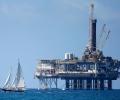
State-run Oil and Natural Gas Corporation (ONGC) Ltd reported a 112 per cent year-on-year increase in standalone net profit for Q1 FY27, reaching 17,034 crore, primarily due to higher crude oil prices and increased realisations from new well gas. Despite a consolidated net profit decline due to HPCL's losses, ONGC's core upstream business showed robust growth.

Verify a content creator's Sebi registration, qualifications and certifications before acting on their advice.

India's exports increased by 15.5 per cent to USD 40.41 billion in June, but the trade deficit significantly widened to a record USD 30.43 billion due to a 31 per cent surge in imports.

A coalition of 25 Democratic-ruled US states has filed a lawsuit against the Trump administration's decision to impose new tariffs on 60 economies, including India. The states contend that these tariffs, ostensibly aimed at combating forced labour, are illegal taxes that will raise costs for consumers and businesses, and were implemented without proper legal justification.

Indian Oil Corporation Ltd (IOCL) plans to invest approximately Rs 1 trillion in petrochemical projects over the next five to six years, aiming to significantly increase its petrochemical intensity and production capacity to meet growing domestic demand.

Inflows into foreign currency non-resident (bank), or FCNR (B), deposits have significantly underperformed market expectations, leading to a more than 1 per cent depreciation of the rupee against the dollar this week. Analysts point to fading RBI support measures, tepid interest due to rising global bond yields, and narrowing interest rate spreads compared to 2013 as key challenges.

ArcelorMittal reported a significant 62 per cent year-on-year decline in its net income, reaching USD 683 million in the June 2026 quarter, despite a quarter-on-quarter increase in sales and improved performance from its Indian joint venture, AMNS India.

India anticipates a reduction in the United States' proposed tariffs on Indian goods under the Section 301 investigation, following New Delhi's recent notification to restrict the import of products made with forced labour.
